"There was only one real restaurant in town (five years ago)," says restaurateur Marco Bertini. "Now there are probably 20 good places to eat."
Labuan Bajo has a "Wild West" feel to it -- with an Islamic twist.
The roads are broken, dust gets churned up in the air and the Islamic call to prayer resounds from tinny loudspeakers in the still of the night.
But it's worlds away from how it looked and felt when Italian chef Marco Bertini, owner of Made in Italy -- an al fresco restaurant that serves lobster bisque and handmade ravioli -- moved to Labuan Bajo in 2010.
"Flores is moving so fast -- the development I've seen in the past five years is the equivalent of 20 years' development in other parts of Indonesia," Bertini says.
"There weren't any roads back then -- just rocks and mud. There was only one real restaurant in town. Now there are probably 20 good places to eat."
In addition to a rising dining scene, this part of the island has started to attract investors and hoteliers.
A raft of new hotels has opened in Labuan Bajo, ranging from basic backpacker haunts like theGardena Hotel to four-star properties like Bintang Flores Hotel.
The best places are located on the picturesque hillsides like Selini on the Hill (a suite for $53, per night) and Bayview Gardens Hotel -- with lush tropical surroundings and sweeping views of the portside district and island-studded waters of the Flores Sea.
Read More
Besides grilled fish or ‘Ikan Bakar’, other traditional meal, but ‘Halal’ yang can try when you are in Bali is ‘Nasi Campur’ and ‘Nasi Ayam Bali’. Here are some recommended places:
1. Warung Wardhani, Jl. Yudistira Denpasar
This warung has been known for a long time, and become a favourite place for important people. The menu contains of plain rice (nasi putih), beef, satay, sambals and tasty vegetables.
2. Nasi Ayam Pantai Sanur
Sanur is approximately 10 km east from Denpasar. This beach is less crowded than Kuta. There are also many international hotels here like Hyatt SanurSanur Beach hotelInna Grand Bali BeachMercure, etc.
Not just hotels, here they also have some places for delicious Nasi Ayam such as Nasi Ayam Pantai, Jalan Segara Ayu, toward Segara Village Sanur. But if you come after 9 am, you probably won’t be lucky to get the meal because the Nasi Campur is already sold out. So you must come early (before 9 am)!
There is other place, but not as crowded as Nasi Ayam Pantai is Warung Khrisna, at Jalan Kutat Lestari No. 4. It opens all day, but if you want to eat here better don’t go after 15:00 because it might be sold out as well. It has one 1 menu; plain rice (nasi putih) with fried stranded chicken, vegetables and Bali sambal. Price is around Rp. 15.000, – per portion.
Do you like a fried fish? Then you should come to warung Ikan Goreng Mak Beng, Sanur, near Museum Le Majeur, in the end of Jalan Hang Tuah/Jalan Pantai (same road to Hotel Inna Grand Bali Beach. This place has been opened since 40 years ago and still full of guests until now. Not just a domestic guests, but also international tourist. 1 set menu contains of plain rice (nasi putih) with fried fish, fish soup, and sambal. Price is affordable.
3. Nasi Ayam Ubud area
When you go to Ubud area, don’t forget to stop at Nasi Ayam Kedewatanlocated at Kadewatan village, west of Ubud, across Kedewatan temple. From Denpasar it’s about 45 minutes driving. Menu is just plain rice (nasi putih) with different kind of chicken either fried, grilled or dibetutu (its special way of Balinese to cook chicken)
4. Ayam Betutu – Gilimanuk
If you come to Bali with personal vehicle from Ketapang to Gilimanuk, before you go to Denpasar or Kuta, better you stop at the legendary warung selling Ayam Betutu Men Tempeh, Gilimanuk. It’s located behind bus terminal.
But this place is not recommended for you who don’t like spicy food because they serve it with very spicy sambal. I can sure you, it would make you sweating and watering mouth because is too hot!!
5. Bebek Bengil – Ubud
Better you don’t miss this place when you come to Bali! Bebek Bengil Restaurant at Jalan Hanoman, Padang Tegal, UbudThey have a very delicious crispy duck, and of course it won’t be complete without the famous Bali spicy sambal! For 1 portion main course Crispy Duck, the price is around Rp. 100.000,-. Just for Crispy Duck is around Rp. 60.000,-. Besides Crispy Duck, they have also other menus like Nasi Campur Bali, king prawn, mashed potato and Chicken breast.
Even the price is probably more expensive, you should try it sometimes. This restaurant is very famous among tourist, it serves great meals as well nice place for the guests to enjoy their food, even Mick Jegger and his ex-wife Bianca ever ate here.
Want to taste traditional meals from Singaraja? Just come to Nang Lecir restaurant at Jalan Ki Hajar Dewantara, Denpasar. They serve nasi campur with ‘sudang lepet’ (thin crispy fried fish) – originally from Singaraja.
Read More
Bali’s very own Ladurée, Angelita Patisserie might just be our newfound favourite in Seminyak. It is every bit Parisian, in the softest pastel hues and candy-coloured chinaware. A stunning display of in-house bakes and sweet creations, Angelita is an elegant tea salon-cum-patisserie that serves French sweets.
Think eclairs in assorted flavours like oreo and passionfruit, chocolate tarts and raspberry mousse cakes, and a very delectable banana and nutella tart with a chocolate biscuit base. Fine and exquisite, everything here is so reasonably priced between RP30,000 to RP50,000.
Jalan Raya Kerobokan no. 10A
Banjar Taman, Kerobokan, Kuta, Bali
Tel: +62 361 7473138
Area: Seminyak
Ibu Oka

#2 Babi Guling Ibu Oka

Babi Guling, or suckling pig, is one of the most famous food in Bali. Warung Babi Guling Ibu Oka is an institution in Bali, and it is known to serve one of the best, if not the best Babi Guling. Rice topped with suckling pig skin, grilled sausage, grilled pork, and deep-fried pork, this dish is good for the soul but bad for the arteries.
Babi Guling Ibu Oka is listed in our guide to Ubud’s Best Places to Eat.
Jalan Suewta
Tel: +62 361 2077 490
Jalan Raya Teges
Peliatan, Ubud
Tegal Sari No 2
Tel: +62 361 976435
Balique Restaurant

#3 Balique

Located near Intercontinental Hotel at Jimbaran, Balique is a beautiful vintage restaurant which serves a good balance of Indonesian food and western food. It is by the same owners as The Bistrot, another of our favourite restaurant in Seminyak.
Jalan Uluwatu no. 39
Jimbaran, Bali
Tel: +62 361 704 945
Bebek Bengil

#4 Bebek Bengil

Bebek Bengil (Dirty Duck Diner) is another famous restaurant that you have to try. It rose to fame with its crispy dirty duck, and it is now a dining destination in Ubud. The crispy duck is indeed very very good – tender, succulent and flavourful, with a crackly-crisp skin. It is the benchmark for how a good duck should taste like. In a word, heavenly.
Bebek Bengil is listed in our guide to Ubud’s Best Places to Eat.

Read More
When most Americans think of Satay, they immediately conjure up the image and taste of the tangy peanut sauce that is commonly served with chicken skewers. Although this dish has been around for nearly two centuries, it is only now that its acclaim has reached the palate of customers in the United States. In the process of crossing the Pacific Ocean, the original Indonesian Satay has gone through a wild transformation from its humble beginnings. There is some controversy in the history of the Satay, as both the Malaysian and Indonesian Satay claim to be the first. However, culinary experts that have studied the food patterns of Southeast Asia generally identify the Indonesian Satay as being the first. However, the version that is now available from many American restaurants has more resemblance to the Thai Satay than to the original version of Indonesian Satay. Because of the geography of Southeast Asia, the food culture was able to spread rapidly through the various countries. There are not great land or ocean barriers that prevent trade or communication between countries, meaning that knowledge about food preparation is easily transmitted to other cultures. The Indonesian Satay is a prime example of this phenomenon. In Indonesia, the dish became quite popular immediately after its introduction. When traders from Siam, Cambodia, and other countries visited Indonesia, the took the recipe for Indonesian Satay home with them. This led to the creation of separate but distinct Satays in all of the nations of the area. Thai Satay has become the most popular with western appetites, as the Thai cuisine has been more accepted in American restaurants. However, many more versions other than Thai Satay exist for consumers to try. Malaysia, Laos, and Vietnam are only a few of the other countries that have developed their signature type of Satay. The Satay.com website has excellent pages explaining the differences between the various types of Satay. At Satay.com, a person can also find a wealth of recipes so Thai Satay and other regional specialties can be made at home. The main difference with Thai versions and other types are the meat and flavors that are generally used. In the case of the original Indonesian Satay, the flavors used are typically based on soy and local ingredients that are found there. The Thai Satay often features a dipping sauce that is made from peanuts. It is this characteristic taste that has landed the dish as one of the favorite street foods in both Thailand and the United States. While a Satay from Thailand commonly uses chicken as the primary meat, versions from Indonesia and Malaysia use pork more often as the meat is more readily available in these countries. Recipes can be found that highlight all of the various flavors of these countries.
Read More

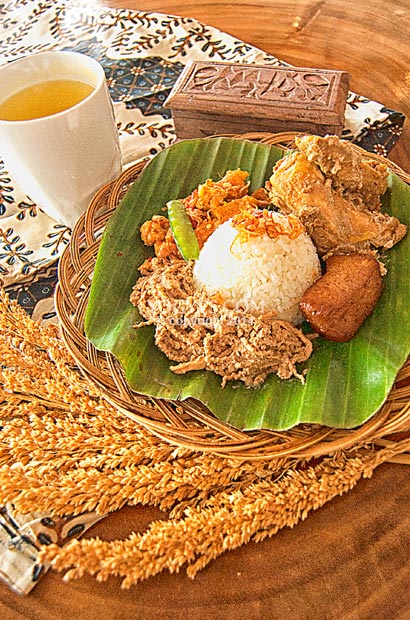
Since many years ago, gudeg, traditional food made from young jackfruit, has been the most popular food in Yogyakarta. Not only in 'gudeg center', can you also find this food in every part of the city. Dried gudeg becomes the most wanted gift from Jogja.
If New York is called as "Big Apple" and Jakarta as "Big Durian", Yogyakarta is possibly called "Big Jackfruit" because of the well-known gudeg. Gudeg becomes a main menu for those who visit Java Island. Gori (young jackfruit) is cooked together with coconut milk and many spices for hours. After it is done, the gori will taste sweet. Gudeg is usually served with hot krecek (cow skin), telur pindang (egg), tahu and tempe bacem (soya cake), ayam opor or bacem (chicken), and areh gurih (coconut milk dressing) that give special sensation when you eat it.

GUDEG KERING, GUDEG BASAH, AND GUDEG MANGGAR

Gudeg Basah 


Gudeg Kering

Gudeg Manggar


For many people, gudeg has only one style, but actually, there are three kinds of gudeg, namely gudeg kering, gudeg basah, and gudeg manggar. Gudeg basah is served with yummy coconut milk gravy. This food, which is a right choice for breakfast, can be found on Kaliurang Street (Barek area), at Gudeg Batas Kota (Adisucipto Street in front of Saphir Square) or the street hawker at traditional markets in Yogyakarta.

Gudeg kering (dry gudeg) is cooked longer than gudeg basah until the gravy dry and the color turns into brown. It also tastes sweeter. It can last for 24 hours or more if it is stored in a refrigerator. 
Besides gudeg from young jackfruit, Yogyakarta also has gudeg manggar. Manggar means coconut flower that bears a different sensation in this food because this flower has crunchy texture like mushroom. However, the limitation stock of raw material (manggar) makes this food is hardly found. Some sellers should close their restaurant and only serves this food with order. There are only several places to find it like in Bantul.


FROM THE DAWN UNTIL MIDNIGHT


Yogyakarta is a never-sleep city and one of the things that always make it awake is gudeg. Many gudeg sellers sell their food from the dawn till midnight. When the sun starts to shine, Wijilan and Barek also start to be alive and many people start their day by having gudeg as their breakfast. The sellers in these areas will patiently serves the visitors until 8 or 9p.m. Do you want to eat gudeg in the middle of the night? You don't need to worry because Gudeg Batas Kota (on Adisucipto Sreet in front of Saphir Square) opens at 10p.m and is ready to serve you with its yummy food. For other alternative, you can try the sensation of how to eat gudeg in the kitchen where it is cooked at Gudeg Pawon on Janturan Street 36-38 Warungboto
Read More
 This is probably the most popular Indonesian dish: chicken, lamb or beef chunks in skewers, grilled, and topped with peanut sauce – satay (or sate in Indonesian). You can probably find Satay in any part of the world, but there are variations of Satay that you can only find in Indonesia. These Satay have different spices, sauces, and even the way it skewered. Here are the 12 different types of Satay that you can find in Indonesia:

 Sate Ayam (Chicken Satay)


 Sate Ayam This is the most common Satay sold in Indonesia. You can find it everywhere—from street peddlers to the up-class restaurants in 5-star hotels. It is chunks of chicken meat (usually combined with chicken liver and skin) skewers that is marinated in soy sauce spice and then grilled. It is usually served with sweet and spicy peanut sauce, sliced shallots, and chopped chilies along with steamed rice or lontong (rice cake).

 Sate Kambing (Lamb Satay) 


 Sate Kambing Just like its name, Sate Kambing is made from young lamb meat. The unique thing about Sate Kambing that the meat is not washed in water because it can make the meat smells bad. Minced pineapple is usually used to wash the meat as well as to make the meat soft and tender. Sate Kambing is usually served with two options of sauce—peanut sauce or sweet soy sauce, completed with diced tomatoes, cabbage, cucumber, and chopped chilies. It is best eaten with hot steamed rice.

 Sate Maranggi Sate Maranggi 


 Sate Maranggi is a popular Satay from Purwakarta, West Java. Usually Sate Maranggi is made from lamb meat or beef. The marinating sauce is usually made from the mixture of green chili paste and cuka lahang (vinegar made from sugar cane) so it tastes a little bit spicy.

 Sate Kerang (Scallop Satay) 


 Sate Kerang This Satay is not like other grilled Satay mentioned above. This specialty food from Surabaya, East Java is cooked by boiling the scallops and sauté them in hot and sweet spice. Usually Sate Kerang is eaten along with lontong balap (famous rice cake dish from Surabaya).

 Sate Kalong Sate Kalong


 Sate Kalong literally means ‘Bat Satay’. But don’t worry, this Satay isn’t made from bat meat at all. Sate Kalong is made from ox meat and marinated in sweet spice. It taste sweet and a bit like dendeng sapi (Indonesian jerked meat). It was named Sate Kalong because usually the peddler sells this Satay from the evening until midnight (‘Kalong’ in Indonesian also means begadang or staying up late).

 Sate Padang Sate Padang 


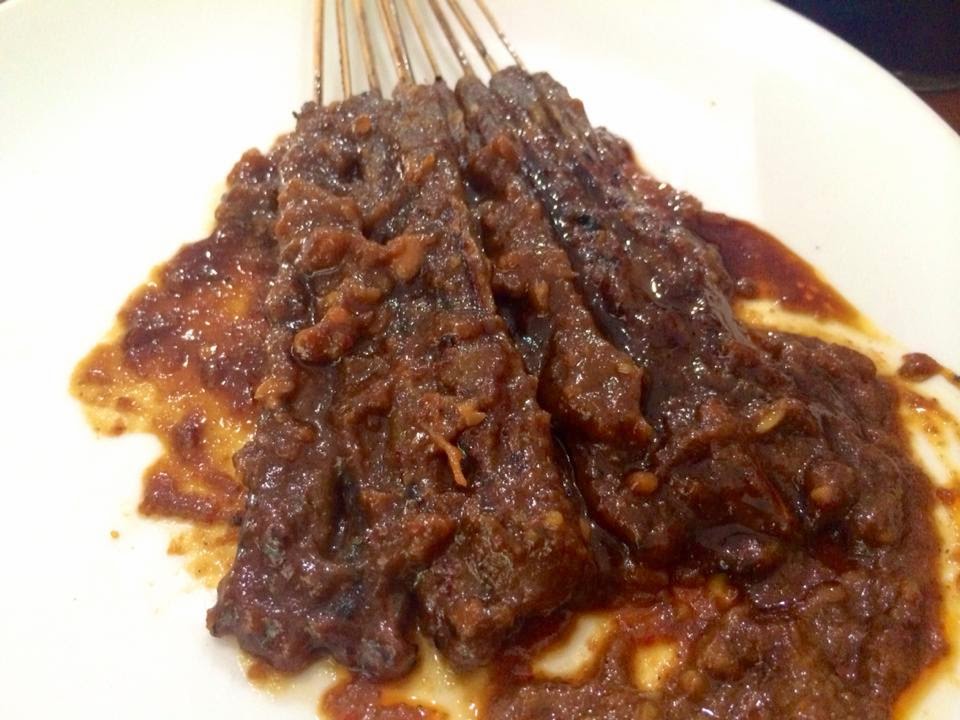
 Sate Padang is the name for three types of Satay that are famous at West Sumatera: Sate Padang, Sate Padang Panjang, and Sate Padang Pariaman. All of these Satay are made from ox tongue or beef. You can see the difference of the three by looking at the sauce. Sate Padang has spicy flavor because the sauce is made from peanut sauce and chilies. Sate Padang Panjang tastes not too spicy and the sauce has yellow in color, while the sauce of Sate Padang Pariaman has spicier flavor and the color is red. 

Sate Torpedo


 Sate Torpedo This is one of the most unique kinds of Satay from Indonesia. Sate Torpedo is made from torpedo or the testicles of goat. Many people, usually males, love to consume this Satay as it is said can improve the energy and stamina of males.

 Sate lilit Sate Lilit


 Sate Lilit is the specialty food from Bali. There are various main ingredients used for Sate Lilit such as meat, chicken, fish, pork, or even turtle. But the most popular (and delicious one) is Sate Lilit made from fish. The minced fish meat is mixed with shredded coconut, coconut milk, lime juice, shallots, and pepper. This dough then wrapped around lemongrass and grilled above charcoals.

 Sate Ambal Sate Ambal


 Sate Ambal is a specialty Satay from Ambal, Kebumen, Central Java. It is actually just like Sate Ayam, but with different sauce. The sauce is made from crushed tempeh and chilies that it mixed with other spices. Usually this Satay is consumed along with ketupat. 

Sate Usus


 Sate Usus This Satay is also not grilled, but sautéed in spices and then skewered using bamboo skewers. Just like its name, it is made from usus (chicken’s intestines). Sate Usus also comes in form of boiled one, and then it is fried before serving.

 Sate Buntel Sate Buntel


 Sate Buntel is famous in Solo or Surakarta, Central Java. It is made from minced beef or lamb (especially the belly or ribs area). The fatty meat then wrapped in a meat’s membrane before being wrapped around bamboo skewers. It is then grilled on fire charcoal, and removed from the skewers before serving. The sauce is made from the mixture of sweet soy sauce and ground pepper. 

Sate Bandeng 

Sate Bandeng It is dubbed as a unique Satay from Banten. Sate Bandeng is made from boneless bandeng (milkfish). The milkfish meat is minced and mixed with spices, and then inserted into the milkfish’s skin. It does not use skewers but a tongs made from bamboo, and grilled on fire charcoal.

Read More


Rendang

It is public knowledge that Nasi Padang (literally translates to Padang rice, but meaning Padang food) has become the country’s most famous contribution to Indonesian cuisine. When you pay a Padang restaurant a visit, you will enjoy a very unique dish. Instead of going to the counter for a direct order, you simply sit down and waitresses will bring various dishes to the table. Padang Restaurants are spread across Indonesia; no matter which city you go, there is always a Padang restaurant around.
One of the most delicious Padang foods is rendang, a dry beef curry cooked with coconut milk and spices for several hours until almost all the liquid has been evaporated. Every Padang restaurant is based around this dish, and families love to cook it at home, especially during the holidays. There’s a deep philosophical connection to the food. The beef is a symbol for the ninik mamak (tribal leader), coconut is connected to cadiak pandai (the intellectual), chilli relates to the alim ulama (spiritual leader) and condiments represent society as a whole. In the past, rendang was only for the aristocratic. Now everyone eats it.

One might say that I make overstatements. You have my word! Many Padang people favour it. Despite their extensive network and lengthy journey of life, Minangnese are still dependent on Padang cuisine for breakfast and lunch, let alone a great meal like dinner. Some of my friends—particularly those with Javanese or Sundanese backgrounds—often shake their heads and are astonished by my seemingly tacky culinary behaviour.As a true Minangnese, who was born and grew up in Ranah Minang, I dare say that I really rely on nasi Padang for breakfast, lunch and even for dinner. I will always go for nasi kapau (made from young jackfruit mixed with other vegetables), ayam balado (spicy fried chicken) and sate Padang (spicy satay) over imported fast foods.
Let me tell you, this is not about a blind love for local food. Rather it deals with the Padang gastronomy. Having shared with other Padang food lovers, the Minangnese rely much on their local cuisine by reason of three major things: cabe (chilli), gulai (curry) and beras (rice). On many traditional functions, such as weddings and thanksgiving ceremonies, the three—spicy chilli sauce, thick curry and perfectly steamed rice—should be served to the guests.
Spicy chilli is instrumental in increasing one’s appetite. How could you eat a meal if it doesn’t give you a good appetite? In addition, not simply do spicy dishes make you eat more and more, but they also make your lunch and dinner more ritual. Though food served is not much, Padang people would have a delicious meal so long as there is chilli in it. They believe that dishes without spicy chilli sauce are not real dishes. Yet Padang chilli sauce is not the same as various chilli sauces found in Java, called sambal, since it is made of curly red chillies.
What about gulai? This turns out to be the next essential element as we take our tour around Padang cuisine. In Padang, smart cooking means the capability of preparing gulai (curry). Rendang, asam padeh (sour and spicy stew dish), kalio (watery and light-coloured gravy), to mention just a few, are variations of Padang gulai. You are not ‘good at cooking’ for making fried chicken, griddling pancakes or stir-frying vegetables. When someone excels at cooking gulai, he or she is knowledgeable about spices. That is why, to many Padangnese, ingenuity in cooking is identical with gulai cooking skills.
Last but not least, rice should be taken into account. The majority of Indonesians consume it as their staple food, however, it is so unique that Padang people can only enjoy steamed rice. They would never eat sticky rice like their Javanese brothers and sisters. No matter how poor they are, Padangnese never shift to corn, potato or sweet potato as an alternative to rice. For Padang people, a meal without rice is like a day without sunshine.
Padang food is not only made of meals, but also traditional snacks. While organizing functions and events, for example, I resort to serving and mixing modern cakes with local snacks. Along with brownies or muffins, kelamai (a sweet coconut palm sugared snack), kue talam (sweet glutinous rice cake) and lapek (banana pudding) are dished up as well.


Asam Padeh

A small change has begun to occur in recent years, thanks to the development of information-technology and burgeoning young people who are always interested in learning something new. In the past few years, Javanese food and beverages have failed to attract Minangnese customers because they are too sweet for the taste of Padang people. Noted restaurants in Java, like Wong Solo and Ayam Goreng Nyonya Suharti were unable to survive in West Sumatra.
Now, restaurants and cafes serving dishes of the archipelago such as ayam penyet (chicken with tempe and sambal) and pecel lele (fried catfish and rice with a side of sambal) are welcomed in many cities around Ranah Minang. The key lies in their ability to adapt to the taste of consumers in Padang. Like it or not, Padangnese culinary traditions are truly extreme. While Javanese, Sundanese or Jakartans can enjoy different meals without effort across the country, Padangnese still have trouble finding ‘foreign dishes’ suitable for their palates.
Read More